How to Develop your EI
Key Takeaways:
- EI isn’t a soft skill. It’s the platform everything else runs on. Emotional intelligence explains 58% of job performance. Your strategic skills, decision-making, and change management are applications. EI is the operating system they depend on
- We’re in an Emotional Recession, and leaders are feeling it most. Global EI scores dropped 5.79% between 2019 and 2024. Optimism fell 8%. Leaders are running depleted operating systems while demands for complexity, change, and AI adaptation increase.
- Development starts with the body, not the mind. Your nervous system shapes your leadership before conscious thought kicks in. If you can’t read your own signals and regulate physically, no amount of EI training on top will stick.
Emotional intelligence explains 58% of performance across every job type measured. Not communication skills. Not technical expertize. Not strategic thinking. Emotional intelligence.
That statistic from TalentSmart has been circulating for years, but most leaders still treat EI as a personal development add-on. Something to work on after the “real” priorities are handled.
That framing misses the point entirely.
Think of your leadership capability as a computer. Your strategic skills, your decision-making, your ability to manage change: those are applications. Useful, powerful, necessary. But every application needs an operating system to run on.
Emotional intelligence is that operating system. When the OS is working well, everything performs. When it’s struggling, nothing works the way it should, no matter how good the software.
The question isn’t whether you have an emotional operating system. You do. The question is whether you’re maintaining it deliberately or letting it degrade by default.
The Emotional Recession
The urgency is real. A peer-reviewed study in Frontiers in Psychology, analysing 28,000 adults across 166 countries, found that global emotional intelligence scores declined 5.79% between 2019 and 2024. Not in a few areas. Across every single competency measured.
The steepest drops hit the capabilities leaders need most:
- Optimism fell 8%
- Intrinsic motivation dropped 7-8%
- Sense of purpose declined at the same rate
Six Seconds CEO Joshua Freedman calls this an “Emotional Recession”: a sustained period of emotional depletion eroding the quality of work, relationships, and organizational culture at a global scale.
Leaders are running depleted operating systems while demands increase. More complexity, more change, more hybrid coordination, more AI-driven disruption. And less emotional capacity to handle any of it.
This isn’t an abstract trend. It’s a performance risk hiding in plain sight.
Your Body Leads Before Your Brain Does
Most leadership development starts with the mind. Self-awareness, empathy, emotional regulation as cognitive skills. But the emerging science points somewhere more fundamental: your body.
Interoception is the ability to sense internal body signals: heartbeat, breathing, muscle tension, gut feelings. Research from Harvard Medical School shows that the insula cortex processes these signals, integrating sensory, emotional, and cognitive inputs into a coherent sense of your internal state.
People with higher interoceptive ability literally use body sensations to guide better decisions. That “gut feeling” experienced leaders describe isn’t mystical intuition. It’s your brain processing body data faster than conscious thought can keep up with.
The three nervous system states
Dr Stephen Porges’ polyvagal theory maps three states that shape how you lead:
Your nervous system constantly assesses whether your environment is safe or threatening. It does this unconsciously, through what Porges calls neuroception. When you’re stuck in threat mode, your team picks that up before anyone consciously registers it. Not through what you say. Through your tone, your posture, the micro-expressions you don’t even know you’re making.
Think of this as the hardware layer of your operating system. If the hardware isn’t functioning, if you can’t read your own signals and regulate your own nervous system, no amount of emotional intelligence training on top will land properly.
Your Mood Isn’t Private. It’s Infrastructure.
Leaders often think of their emotional state as personal. It isn’t.
The mirror neuron system (neurons that fire both when you perform an action and when you observe someone else doing it) is the neurological basis for emotional contagion. EEG research has found significantly higher neural synchronisation between leaders and followers than between followers and followers.
What this means in practice:
- Your emotional state has a disproportionate, measurable neurological influence on every person you interact with
- The brain doesn’t distinguish between intended and unintended emotional broadcasting
- An anxious leader creates a cascading neurological effect across their team before a single word of strategy is spoken
This reframes the entire conversation. EI isn’t personal development. It’s organisational architecture.
Novartis: proof in practice
Novartis Oncology saw this when they embedded EI across their management teams in Europe and the US. Using the EQ-i diagnostic, they built emotional intelligence into how managers led. Not as a one-off workshop, but as a layered programme:
- Individual assessment
- Team development
- Executive 360-degree feedback
- Ongoing coaching
The result wasn’t just better self-awareness scores. They saw “positive mirrored behavior across teams.” Emotional contagion working in the right direction, with leaders modelling the regulation and interpersonal skills that then spread through their organizations.
What to Actually Do About It
The OS metaphor gives you three clear layers to work on. You don’t need to do everything. But you do need to start at the right layer.
1. Upgrade the hardware (body)
Learn to read your own signals:
- Where do you hold tension when you’re stressed?
- What does your breathing do before a difficult conversation?
- What’s your gut telling you that your conscious mind hasn’t caught up with yet?
The practices that build this capacity are simpler than you’d expect. Body scanning, controlled breathing, protecting your sleep. Heart rate variability, a reliable biomarker of emotional regulation, improves measurably with these basics.
If you can’t regulate yourself physically, nothing you layer on top will stick.
2. Update the kernel (core EI)
Start with an honest baseline. Assessments like the EQ-i 2.0 give you data rather than assumptions about where your emotional intelligence actually sits.
Then build through practice, not theory. Neural pathways strengthen through repetition, not reading:
- Role-playing difficult conversations
- Real feedback exchanges
- Experiential learning that engages both emotional and executive functioning
Ninety per cent of top performers have high EI. None of them got there through a textbook.
3. Install better applications (leadership skills)
With a regulated body and developed EI core, the leadership applications start working properly:
- Psychological safety isn’t about being nice. It’s about creating conditions safe enough for candour. That requires a leader whose own nervous system can handle challenge without becoming defensive.
- Emotional broadcasting matters. Once you understand emotional contagion, you can treat your emotional state as something you’re responsible for, not just something that happens to you.
- Self-awareness is a bias antidote. The same self-awareness that powers EI helps you catch cognitive shortcuts before they distort your decisions.
The Irreducible Advantage
As AI automates more cognitive and technical work, the distinctly human operating system becomes the competitive edge that can’t be replicated. Machines will handle analysis, processing, and pattern-matching. What they won’t do is regulate a nervous system, read a room, or create the felt sense of safety that unlocks a team’s best thinking.
Individuals with higher EQ are 10.18 times more likely to report strong outcomes across effectiveness, relationships, quality of life, and wellbeing. That’s not a marginal gain. That’s a different category of result.
EI isn’t one skill among many. It’s the platform everything else depends on. And like any operating system, it doesn’t upgrade itself. It develops through deliberate practice, through experiential learning that changes behavior, not just understanding.
When BASF acquired a manufacturing plant in the Scottish Outer Hebrides and discovered extreme culture issues severely impacting performance, the intervention wasn’t structural. It was emotional intelligence: coaching, assessment, and development focused on how leaders showed up. The plant returned to profit within three years.
Your leadership OS is running right now. The only question is whether you’re maintaining it, or hoping it holds.
Your operating system doesn’t upgrade itself.
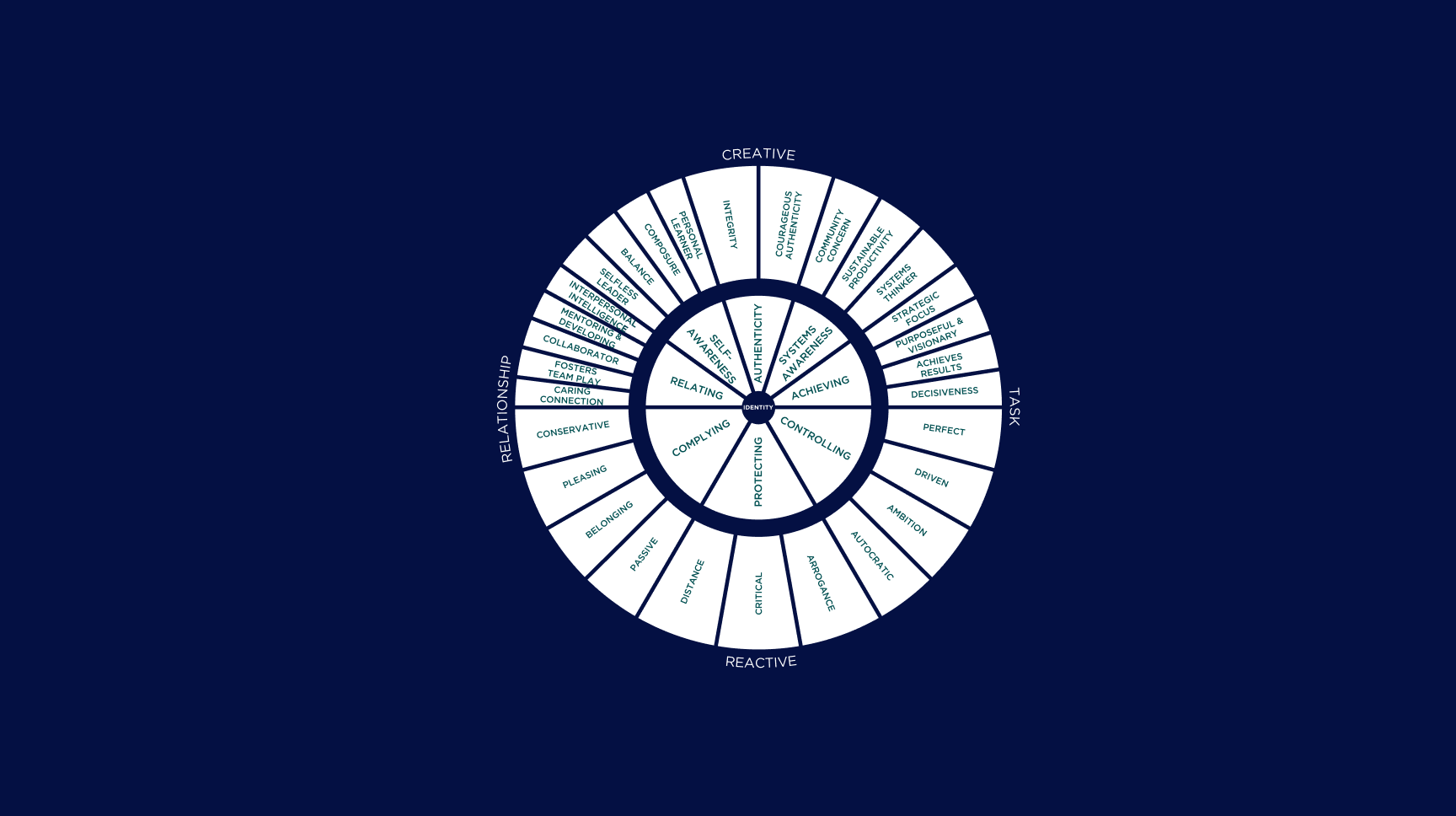
Emotional intelligence develops through practice, not theory. Primeast’s experiential programmes help leaders build the self-awareness, regulation, and interpersonal skills that drive lasting performance, starting with a clear EQ-i 2.0 baseline.
How we help: EQ-i 2.0 Assessment · Leadership Development · Executive Coaching