The gap between what you intend and what they experience
Key Takeaways:
- 60% of new managers fail within two years because they don’t know the gap between how they intend to lead and how their team actually experiences their leadership. 360 feedback reveals blind spots before they derail your career.
- Hybrid work has made self-awareness harder to develop naturally. You can’t read the room when half your team is remote. Structured feedback from multiple sources is now essential, not optional.
- The best 360 assessments don’t just show what you do—they reveal why you do it. Understanding the underlying beliefs driving your behavior is what makes lasting change possible.
Most managers are promoted for being good at their job, not for being good at managing people. They get the title, a small pay rise, and a team of six or ten people who now depend on them for direction, support, and development.
No one teaches them how to do it. They figure it out as they go. Some learn fast. Many don’t.
The Manager Crisis No One Wants to Talk About
Within two years, 60% of new managers fail or underperform. Their teams disengage. Good people leave. The manager works longer hours, micromanages more, and wonders why nothing is getting better.
The pattern repeats across industries and geographies. Someone brilliant at delivery gets promoted into leadership. Eighteen months later, engagement scores have dropped, key people have left, and the new manager is exhausted.
Poor leadership costs organizations up to 7% of annual revenue through disengagement, turnover, and lost productivity. But here’s the part that matters most: if you manage ten people, you’re the primary reason seven of them either thrive or quietly start looking elsewhere.
The question isn’t whether you’re a capable manager. The question is whether you know what your team actually experiences when you lead them. Most managers don’t. And that gap between intention and impact is where careers stall and teams break down.
What Managers Actually Gain from 360 Feedback
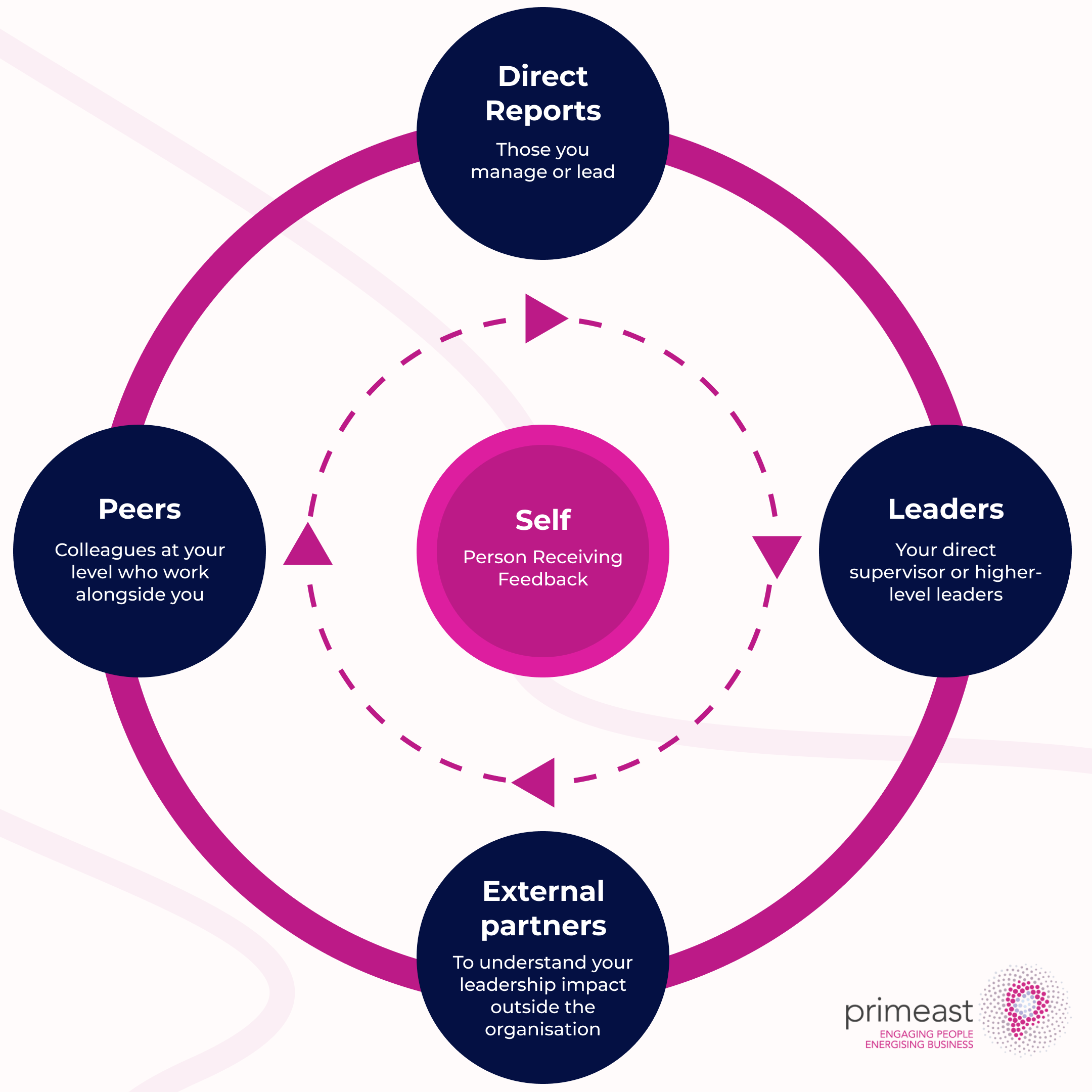
360 feedback shows you what your team, peers, and manager actually see when they work with you. Not what you think they see. What they see.
You discover blind spots before they derail you
You think you’re delegating. Your team experiences micromanagement. You believe you’re being strategic. Your peers see someone lost in operational detail. You’re trying to be supportive. Your direct reports feel you’re avoiding difficult conversations.
These gaps are invisible to you. They’re obvious to everyone else. Only 10-15% of people are genuinely self-aware, even though 95% think they are. 360 feedback closes that gap. It shows you the patterns you can’t see yourself.
You understand the difference between intent and impact
You stayed late to fix a problem your team member was struggling with. You thought: “I’m being helpful.” They thought: “They don’t trust me to solve problems.” You gave detailed feedback on every deliverable. You thought: “I’m developing them.” They thought: “Nothing I do is ever good enough.”
Most managers operate with good intentions. But intentions don’t determine outcomes. Impact does. 360 feedback reveals where your behavior lands differently than you intended.
You get specific priorities for development
Generic self-reflection produces generic insights. “I should be better at giving feedback” doesn’t tell you what to do differently. 360 feedback shows you exactly what to work on. Your team needs you to give more frequent recognition, not just developmental feedback. Your peers need you to communicate decisions earlier, not keep them informed after the fact. Your manager needs you to escalate problems sooner, not try to solve everything yourself.
Specificity is what makes development possible. 360 feedback provides it.
You build trust by acting on what you learn
When you ask for feedback and do nothing with it, trust drops. When you ask for feedback, share what you learned, and visibly work on one or two areas, trust increases. Around 75% of employees say they feel more valued when they see feedback lead to visible changes.
360 feedback isn’t just about self-improvement. It’s about demonstrating to your team that their perspective matters and that you’re willing to grow. That message is more powerful than any speech about psychological safety or open communication.
Why This Matters More Now
Three shifts make 360 feedback more valuable for managers in 2026 than it was five years ago.
1. Hybrid work has eliminated direct observation
You can’t “manage by walking around” when half your team is remote. You don’t see stress levels rising. You miss the early signs of disengagement. You can’t read body language in a video call the way you could in a room.
UK research suggests around 70% of managers feel hybrid work has boosted productivity but made early warning signs harder to spot. Your team sees patterns in your leadership that you simply cannot observe from a distance. Multi-source feedback becomes essential when informal observation is no longer possible.
2. Continuous feedback has replaced annual reviews
Organizations are moving away from once-a-year appraisals toward ongoing development conversations. Around 69% of HR leaders think traditional ratings should disappear.
This means feedback isn’t an event anymore. It’s infrastructure. And if you’re going to build a practice of continuous improvement, you need structured input that tells you what’s actually working and what isn’t.
3. AI can personalise your development, but only if you have the data
Tools now use artificial intelligence to analyze feedback patterns, suggest development priorities, and track progress over time. The technology can help you make sense of complex input and identify trends you’d miss manually.
But AI only works with what you measure. If you’re not gathering comprehensive feedback about how you lead, the technology has nothing to work with. The managers who will develop fastest in 2026 are the ones who combine structured feedback with the tools that can help them act on it.
What to Look For in a 360 Assessment
Not all 360 feedback is equally useful. Here’s what makes the difference.
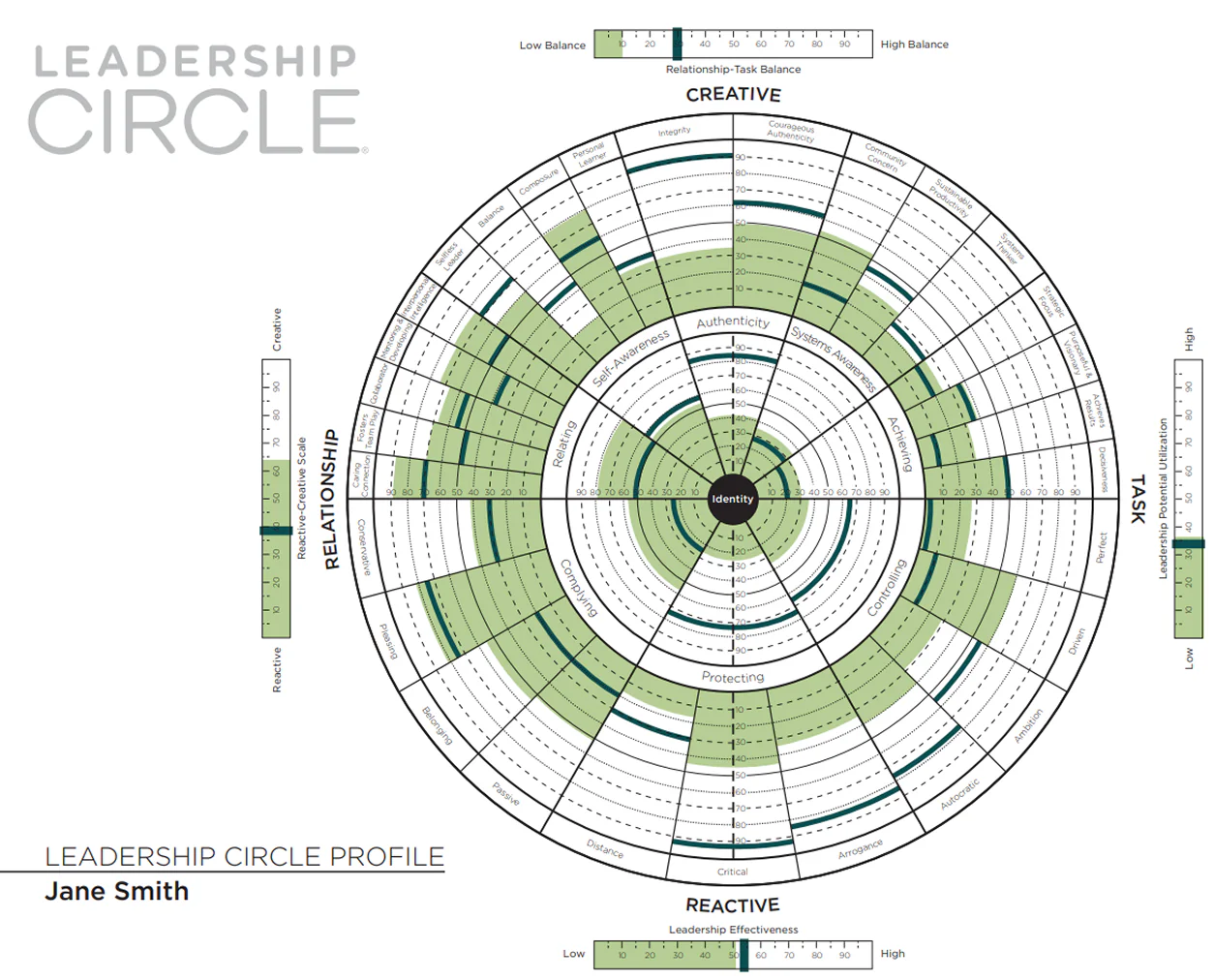
Look for assessments that measure behavior and underlying patterns.
Basic 360s tell you what people observe. Better ones reveal why you behave that way. A manager learns they micromanage. Standard feedback stops there. Comprehensive feedback surfaces the underlying belief: “If I don’t control details, everything will fall apart.”
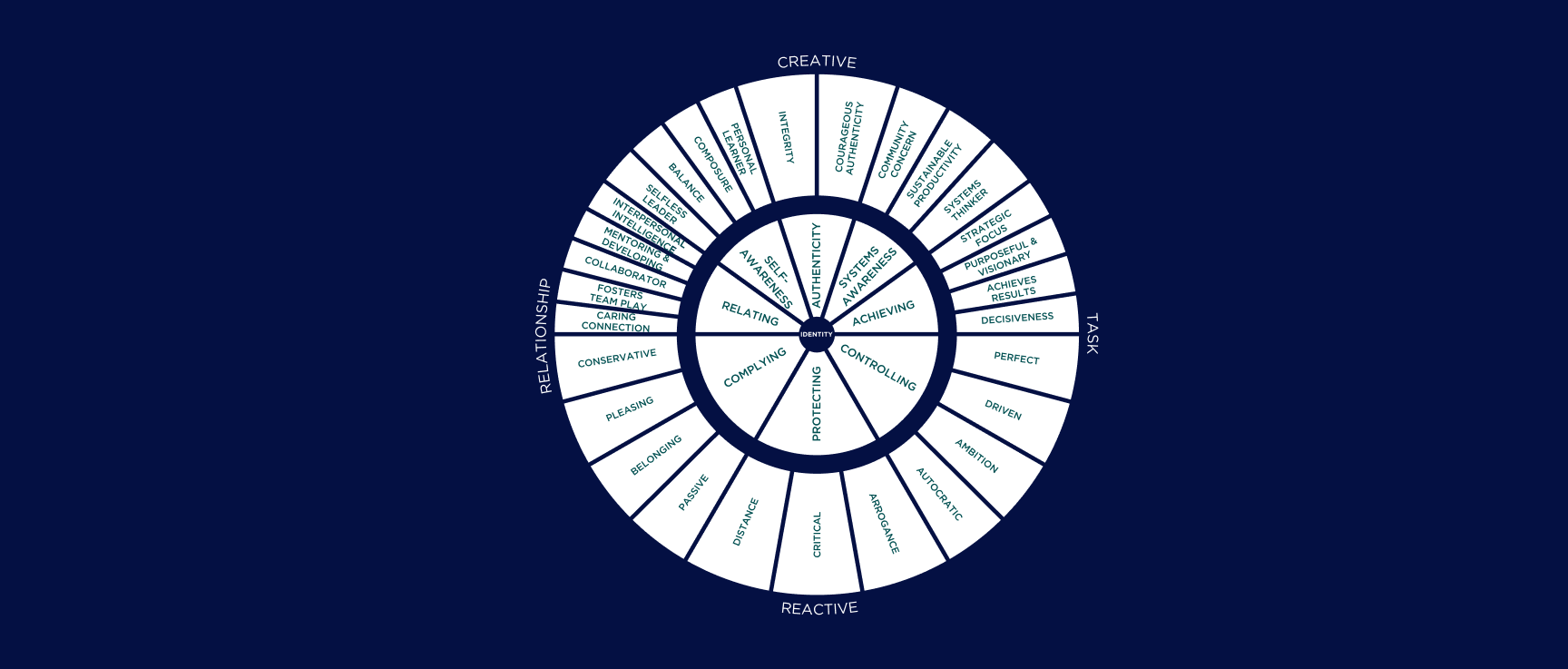
That deeper insight is what makes change possible. Tools like the Leadership Circle Profile measure both the outer game (what you do) and the inner game (what drives those behaviors). When you understand the why, you can actually shift the pattern.
Make sure coaching is included, not optional
A report without support is just data. You need someone to help you interpret complex feedback, identify priorities, and translate insight into specific behavior changes. The gap between “I now know I micromanage” and “I’ve stopped micromanaging” is filled with coaching.
Ensure it’s separate from performance evaluation
If 360 feedback is tied to pay or promotion decisions, honesty dies. People hedge their responses. You get sanitized input that’s useless for development. The assessment should be explicitly for growth, not evaluation.
Choose tools that focus on growth, not judgment
The language matters. Feedback framed as helpful rather than judgmental keeps your brain in learning mode instead of defense mode. Look for assessments designed around development, not deficit-finding.
The Business Reality
The cost of weak leadership is measurable. Poor leadership drains up to 7% of annual revenue through disengagement, turnover, and lost productivity. 70% of employee engagement is explained by the quality of the manager. When people leave, they’re usually leaving you, not the job.
The upside is equally clear. Well-designed leadership development returns approximately $7 for every $1 invested. Structured 360 programs can improve leadership effectiveness by around 23% and lift engagement by approximately 20%. Over 85% of Fortune 500 companies use 360 feedback for leadership development.
Self-awareness correlates with stronger business performance. High-performing organizations have fewer blind spots at leadership level. They invest in helping leaders see themselves accurately and develop deliberately.
The return shows up in retention rates, engagement scores, team performance, and whether your organization can execute its strategy. Because strategy doesn’t fail in the boardroom. It fails in the hundreds of daily interactions between managers and their teams.
What Good Management Looks Like
Most managers operate with good intentions and incomplete information. You want to develop your team. You want to communicate clearly. You want to build trust. But without structured feedback, you’re navigating by instinct and hope.
360 feedback gives you the information you need to close the gap between intention and impact. It shows you where your leadership lands differently than you meant. It reveals the patterns keeping you stuck. It provides specific priorities for growth. The managers who thrive aren’t the ones who avoid feedback. They’re the ones who actively seek it, act on it, and demonstrate that growth is possible at every level.
In 2026, with hybrid teams, continuous development expectations, and the tools to make feedback actionable, the question isn’t whether to get 360 feedback. The question is whether you’re willing to see yourself accurately and do something about what you learn.
Primeast helps organizations develop leaders, teams, and cultures through experiential learning and coaching-powered development. To explore how 360 feedback could support your development as a manager, get in touch.