Why Most 360 Leadership Assessments Fail
Key Takeaways:
- Beyond the “What”: Traditional 360 tools show you what a leader does, but not why. Without uncovering the beliefs behind behaviors, change rarely lasts.
- Reactive vs. Creative: The LCP helps leaders see the difference between fear-driven habits that drain energy and purpose-driven behaviors that build trust and engagement.
- From Insight to Impact: With the LCP, coaching, and the Pulse tool, leaders don’t just get feedback, they build new habits, track progress, and create lasting results for their teams and organizations.
HR leaders often tell us the same story: “We’ve invested in training, but six months later, nothing has really changed.”
We’ve seen it too. One senior leader we worked with was brilliant at the technical side of their role, but their team was struggling with high turnover. Traditional 360 feedback flagged the issues: critical, perfectionist, not building the team. The leader accepted the feedback and attended coaching sessions.
For a while, things improved. But soon enough, the old habits crept back.
The problem wasn’t effort or intent. It was the tool. Most 360 assessments are great at pointing out what a leader is doing, but they stop there. They don’t uncover the deeper beliefs that drive those behaviors. And when you don’t get to those beliefs, you’re only treating symptoms. That’s why so many well-meaning investments fade away without leaving lasting change.
The “What” Trap
We call this the “What” Trap.
In the case above, the feedback wasn’t wrong. His team did see him as controlling and critical. The reports captured that clearly. Armed with those insights, the organization took the logical next step: they built a development plan. Delegate more. Listen actively. Offer positive reinforcement.
But the change never stuck.
Why? Because the focus was on the actions, not the driver. Traditional 360s are designed to measure behavior, what a leader does, but they rarely uncover the belief system underneath.
And when you only coach the visible behavior, the deeper issue never shifts. It’s like painting over rust: the surface looks better for a while, but the problem eventually resurfaces.
LCP Delivers the “Why”
This is where the Leadership Circle Profile (LCP) makes a real difference.
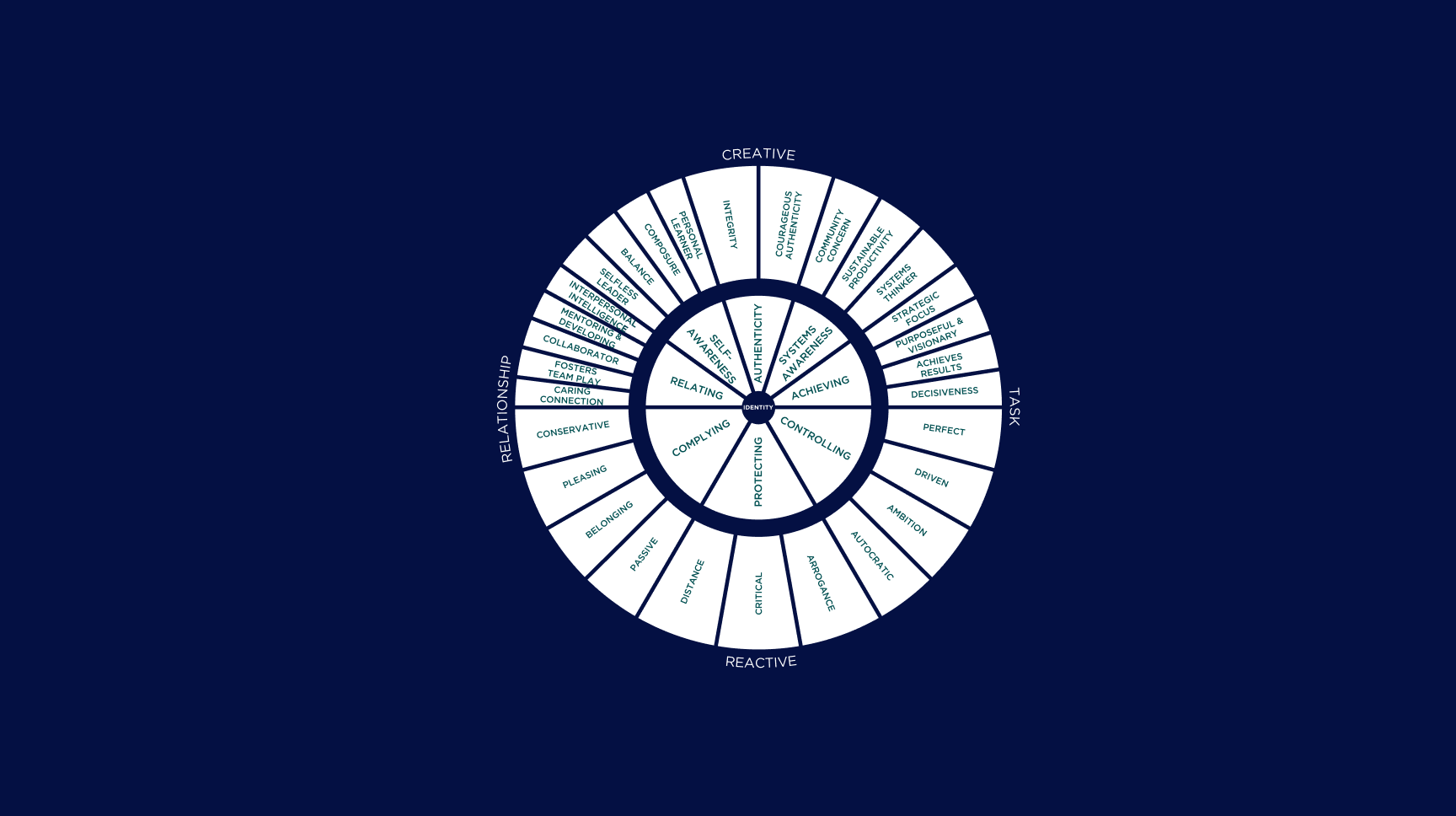
Unlike most assessments, it doesn’t stop at behaviors. It connects the dots between what leaders do and why they do it. In other words, it maps the underlying assumptions, the “operating system”, that drives day-to-day choices.
That operating system usually shows up in two modes:
- Reactive: fear-driven, shaped by external pressure and self-protection.
- Creative: purpose-driven, grounded in values, trust, and long-term vision.
When leaders see this picture of themselves, the why behind their patterns, it often sparks the first genuine breakthrough. They recognise what’s been holding them back, not just what they need to “do differently.”
The Reactive Mindset
The Reactive mindset is built on self-protection. It’s shaped by outside expectations and often runs on fear, fear of failure, fear of losing control, fear of not being enough.
In many cases, this mindset can fuel early success. The drive to “prove yourself” can push leaders to work hard and deliver results. But over time, those same patterns become exhausting. What once looked like strength starts to turn into strain. That’s where burnout and imposter feelings often take hold.
Here’s what it looks like in practice:
- One leader we worked with was seen as highly controlling. The behavior was obvious to his team, but what lay beneath was a belief he had carried for years: “If I don’t check every detail myself, I’ll fail.” That belief led him to micromanage, which frustrated his people and drove them out the door.
- Another leader came across as distant, avoiding conflict at all costs. On the surface, it looked like poor communication. But at the core was a need for approval: “If people don’t like me, I’m not safe.” That belief stopped them from addressing issues directly, eroding trust in the long run.
Traditional tools catch the behaviors. The LCP shines a light on the beliefs driving them and that’s where meaningful change begins.
The Creative Mindset
The Creative mindset flips the script. Instead of operating from fear and self-protection, leaders begin to work from a place of purpose, authenticity, and trust.
When this shift happens, the focus changes. It’s no longer about proving yourself or avoiding mistakes. It’s about building something bigger, aligning the team, empowering others, and moving toward a shared vision.
Take the earlier example of the controlling leader. In the Creative mindset, their belief shifts from “If I don’t control the details, I’ll fail” to “When I develop and trust my team, we succeed together.” That change doesn’t just lighten their own load, it transforms how the team performs.
This is how the so-called “People vs. Results” dilemma gets solved. Creative leaders achieve results through their people, not in spite of them.
One of the most powerful aspects of the LCP is how it makes this shift visible. Leaders can literally see the tension between their Reactive habits and their Creative potential. That moment of clarity often becomes the turning point, the spark that helps them move from knowing what to change to actually doing it.
Reactive Vs Creative Mindset
| Focus Area | Reactive Mindset (Problem/Fear-Focused) | Creative Mindset (Purpose-Driven) |
|---|---|---|
| Identity & Validation | A Reactive leader treats leadership like a performance. They’re driven by the need to meet external expectations, and that pressure often fuels imposter syndrome: “What if I get found out?” | A Creative leader, by contrast, leads from purpose and values. They don’t need to prove themselves and that steadiness builds deep trust with their teams. |
| Results & Achievement | In Reactive mode, leaders tie their worth to personal output. They micromanage details, work longer hours, and often hit burnout. | In Creative mode, the belief shifts: “My role is to build capacity in others.” These leaders coach, delegate, and scale their impact through the team. |
| Conflict & Feedback | Reactive leaders fear conflict. They avoid tough conversations, hoping to be liked but the avoidance creates blind spots and erodes trust. | Creative leaders see feedback, even difficult feedback, as an act of care. They lean into those conversations with honesty and clarity, showing respect for both the person and the purpose. |
The contrast is striking. One mode keeps leaders trapped in cycles of stress and short-term fixes. The other opens the door to authentic influence and sustainable results.
Integrating Insight with Enduring Impact
A single insight doesn’t change behavior. Most HR leaders have seen this first-hand: people leave a workshop energised, but within weeks, old habits creep back in.
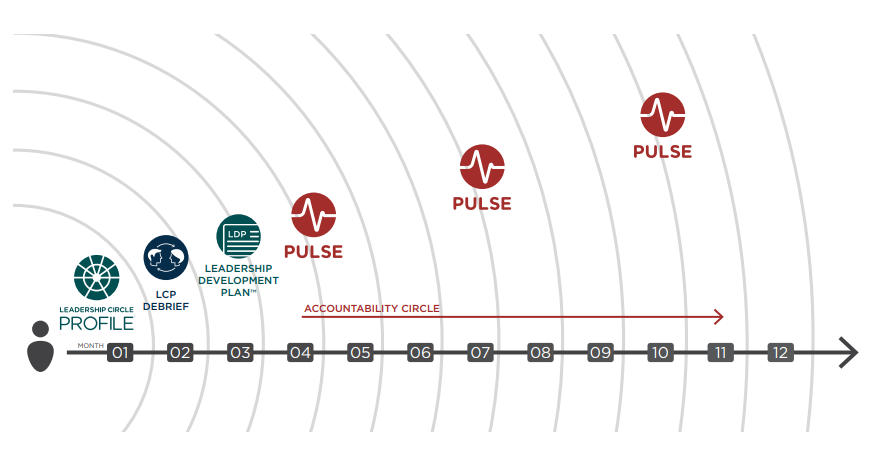
That’s why integration matters. The LCP is most powerful when it’s not treated as a one-off event, but as the starting point for a longer journey. At Primeast, we build on the profile with workshops and several months of coaching, giving leaders the space, support, and accountability to turn insight into practice.
To track that progress, we use the Leadership Circle Pulse Assessment. It’s a simple but powerful way to measure whether new habits are sticking, and to give leaders feedback as they grow.
For HR and senior leadership teams, this matters for another reason too: credibility. The LCP is backed by independent research and validation, with clear links between Creative leadership scores and organizational performance. That means you don’t just get stories of change, you get hard data that speaks to the C-suite.
In practice, this integrated approach means development budgets stop “evaporating” after the workshop. Instead, leaders embed new ways of working that lift both people and performance.
Start the Real Work
Every leader development journey eventually comes down to this: the real work isn’t in the workshop or the assessment. It’s in the daily choices leaders make afterwards: in how they respond under pressure, how they build trust, and how they balance results with relationships.
The Leadership Circle Profile gives leaders the insight to see what’s been holding them back. Coaching and ongoing support turn that insight into new habits. But the courage to do the real work? That comes from the leaders themselves.
At Primeast, we’ve seen what happens when organizations commit to that journey. Leaders grow. Teams thrive. Performance follows.
The challenge is simple, but not easy: will you keep treating leadership as a checklist of behaviors, or will you help your people do the deeper work that creates lasting change?