Ever wonder why a seemingly minor disagreement can escalate so quickly in your team?
Often, it is not the issue itself—but how we communicate around it—that creates tension. Misunderstandings arise when we assume others interpret and respond to situations the same way we do. That is where DISC can transform conflict into collaboration.
The Challenge
Imagine a fast-paced meeting where a high-D (Dominance) team member pushes for immediate decisions, while a high-S (Steadiness) colleague hesitates, needing more time to process. The D perceives the S as indecisive. The S sees the D as aggressive. Neither is wrong; they simply speak different behavioral languages. Without awareness, these misinterpretations build resentment and silence collaboration.
Strategize
Conflict often stems from unmet needs, mismatched communication styles, and different approaches to stress. DISC helps decode those differences:
- D-types value results and action, and under stress may become blunt or impatient.
- I-types seek connection and enthusiasm but may gloss over details or avoid confrontation.
- S-types need harmony and stability and may resist fast change or direct criticism.
- C-types prioritize accuracy and logic but can come across as critical or detached.
When team members understand these patterns, they stop seeing opposition as personal and start recognizing style-driven behavior. With that awareness, conflict loses its emotional sting and becomes a manageable difference.
Dig Deeper
To build a high-performing, low-conflict culture, employees need to recognize their own default styles and learn to identify the styles of others.
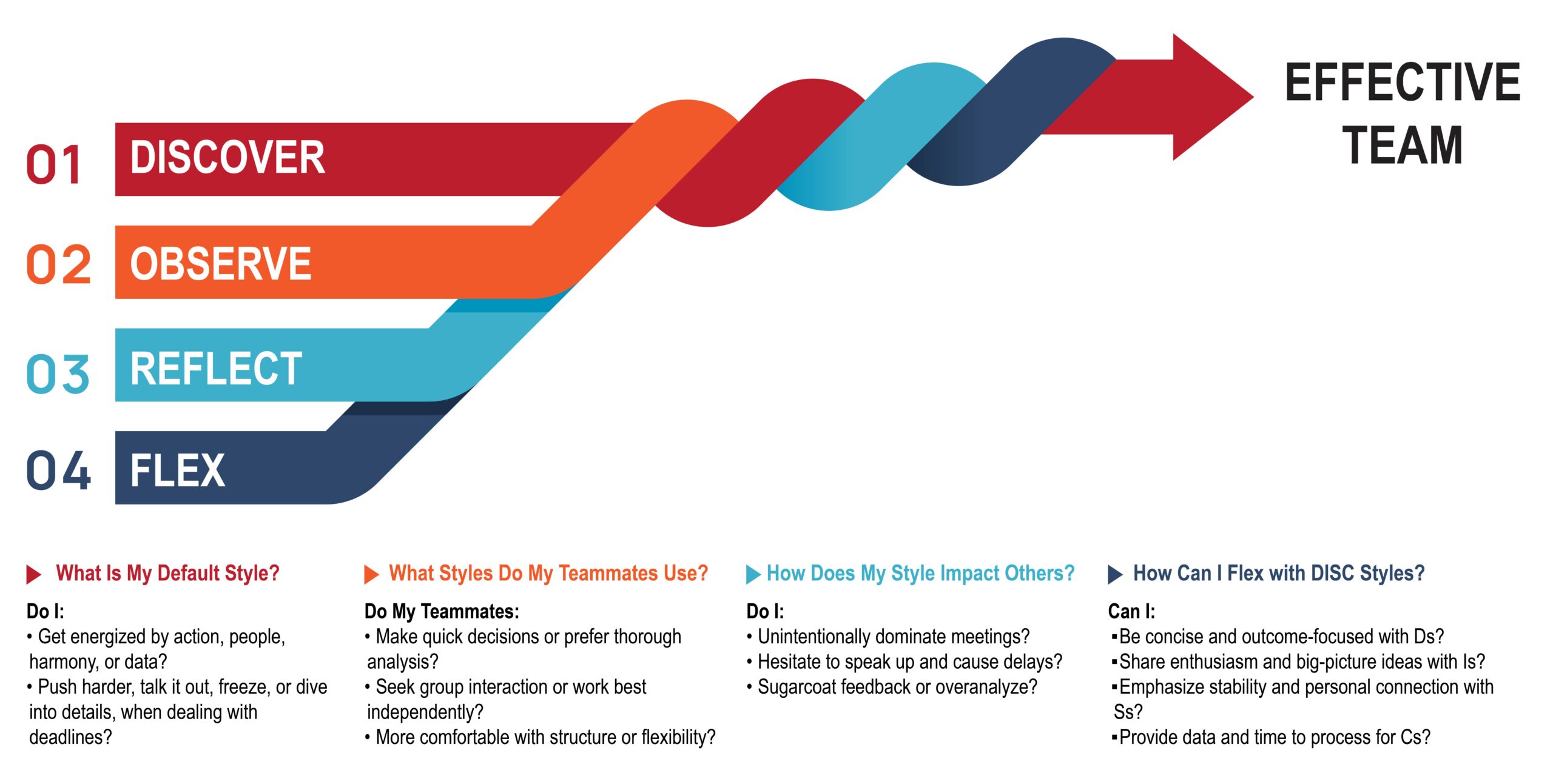
- Self-Discovery: What Is My Default Style?
Use a DISC self-assessment tool or a simplified quiz to help individuals identify their style. A team debrief helps normalize differences and reinforce that no style is “better”—just different.
- Observation: What Styles Do My Teammates Use?
Encourage journaling or a “Style Spotting” worksheet where employees write one behavior they observed and guess the DISC style behind it.
- Reflection: How Does My Style Impact Others?
Encourage reflection on individual styles that supports growth from insight to action.
- Style Crosswalk: Flex Styles in Real Time
Model how to flex styles during planning meetings, feedback sessions, or even Slack communication to boost empathy and precision.
Take Action
- Create a visual team chart that highlights stress triggers and communication tips for each style. This will help normalize differences and provides shared vocabulary for navigating tension.
- Run regular DISC refreshers or mini workshops where employees reflect on their own styles and learn how others operate. This action will help your team build mutual respect and reduce misinterpretation.