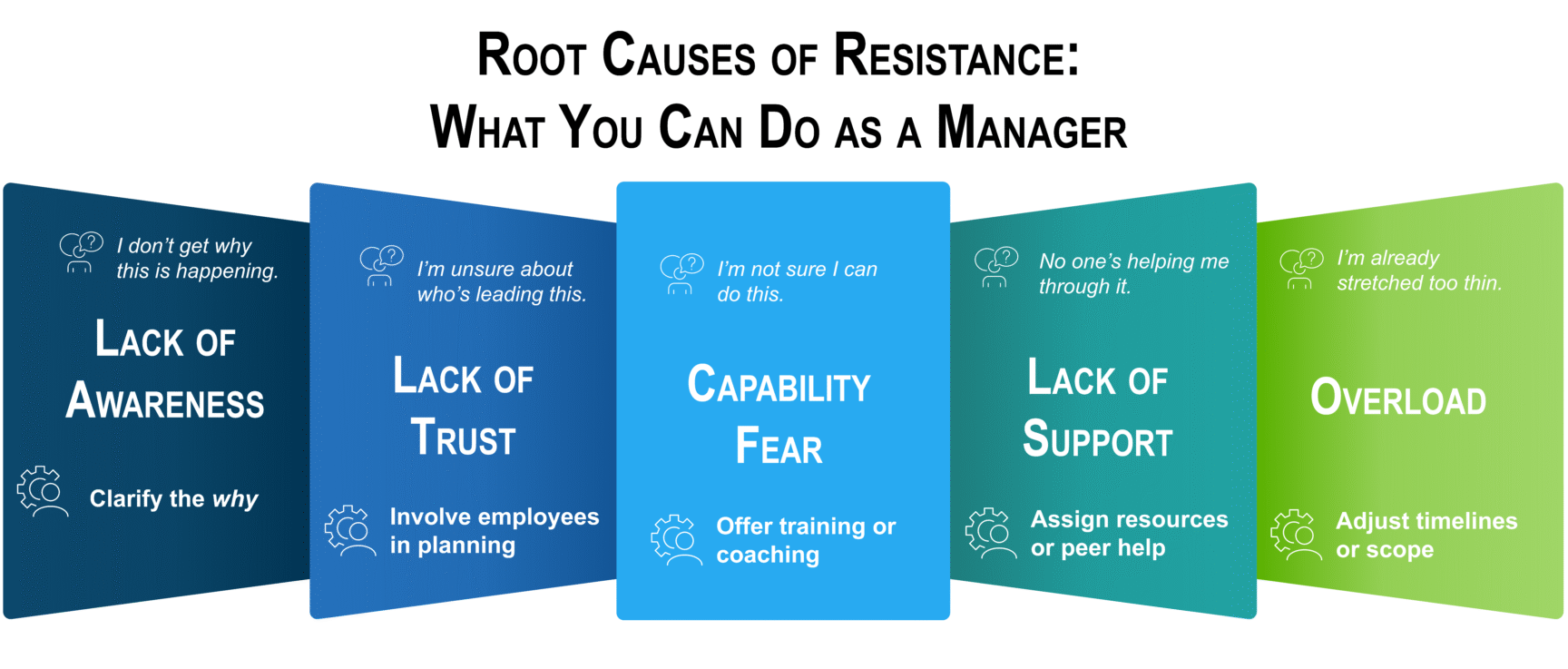
What if the resistance you’re facing isn’t defiance, but a mirror showing you what your team truly needs?
A manager rolls out a new workflow, expecting relief—but the team hesitates. One person challenges the change. Another starts missing deadlines. It feels like resistance for the sake of resistance.
But often, resistance is not about the change. It’s about what the change threatens. Change invites uncertainty. What looks like pushback might actually be:
- Confusion: Why now?
- Fear: Can I do this?
- Fatigue: I’m overwhelmed.
- Mistrust: Who decided this?
Left unaddressed, these signals become power struggles. Reframed, they reveal what needs attention.
Strategize
Resistance often protects something. Before reacting, pause and ask:
- What is this resistance protecting? (Autonomy? Safety? Clarity?)
- When and where does it show up?
- Who is voicing concern? And who is staying silent?

Dig Deeper
Apply the SCARF Lens
Use the SCARF model to identify what might feel threatened:
- Status – Am I unintentionally signaling hierarchy over collaboration?
- Certainty – Have I clearly communicated expectations and timelines?
- Autonomy – Are people involved in decision-making or just receiving directives?
- Relatedness – Do team members feel included, connected, and heard?
- Fairness – Are expectations and workloads distributed equitably?
Even subtle threats to these domains can trigger resistance that feels personal but is actually structural.
Take Action
Reframing resistance is not just about reflection, it’s about response. Here are three applied strategies you can use to turn insight into positive momentum:
- Build a Pre-Change Checklist
Before rolling out a new process, policy, or project, Ask yourself: Have I communicated the why? Involved the right voices? Prepared support? - Host a “Resistance Retrospective”
Gather your team and ask: What concerns surfaced early? What might we do differently next time? - Ask, Then Ask Again
In your next 1:1, try: Say more about that concern. What would help this feel more workable for you?