
A quarterly review ends with a brief message: “This needs to move faster. We are behind” without further context or discussion. In the following weeks, decisions are made quickly, and feedback is brief and corrective. Questions are answered impatiently. The leader believes the message is clear: increase performance. The team experiences limited input, unexplained pressure, and reduced psychological safety.
This growing detachment underscores a crucial dynamic: when the gap between a leader’s intentions and the actual impact widens, teams quietly withdraw. Let’s analyze why this misalignment happens and how leaders can bridge the gap.
The Challenge
Leaders assess themselves by intent; teams assess them by experience. A leader may aim to raise standards, improve accountability, and accelerate results. Yet the impact may feel like undervalued input, mostly negative feedback, inconsistent emotions, or unclear expectations.
Strategize
Closing the intent–impact gap requires behavioral consistency. Leaders must make their intent visible by explaining why decisions are made and how they connect to broader strategy. Structured inclusion should be built into key decision points so team members can see where their perspectives fit.
Practical methods include quick, anonymous surveys after major communications, regular one-on-one or team check-ins focused on feedback, and digital suggestion boxes to gather honest input. These approaches give a clearer picture of team sentiment and allow leaders to make timely adjustments in response to real concerns.
Dig Deeper
Early indicators of misalignment often appear before performance metrics decline. Reduced idea-sharing, lower participation in meetings, and fewer constructive disagreements are common signals. Leaders can monitor these by tracking meeting attendance, noting participation levels, and using short pulse surveys to quickly assess team sentiment. Sample survey questions include: “On a scale from 1 to 5, how comfortable do you feel sharing new ideas in our meetings?” or “Do you feel your input is considered in recent decisions?” Reviewing feedback from engagement surveys and monitoring high-performer retention trends also provides valuable data.
Take Action
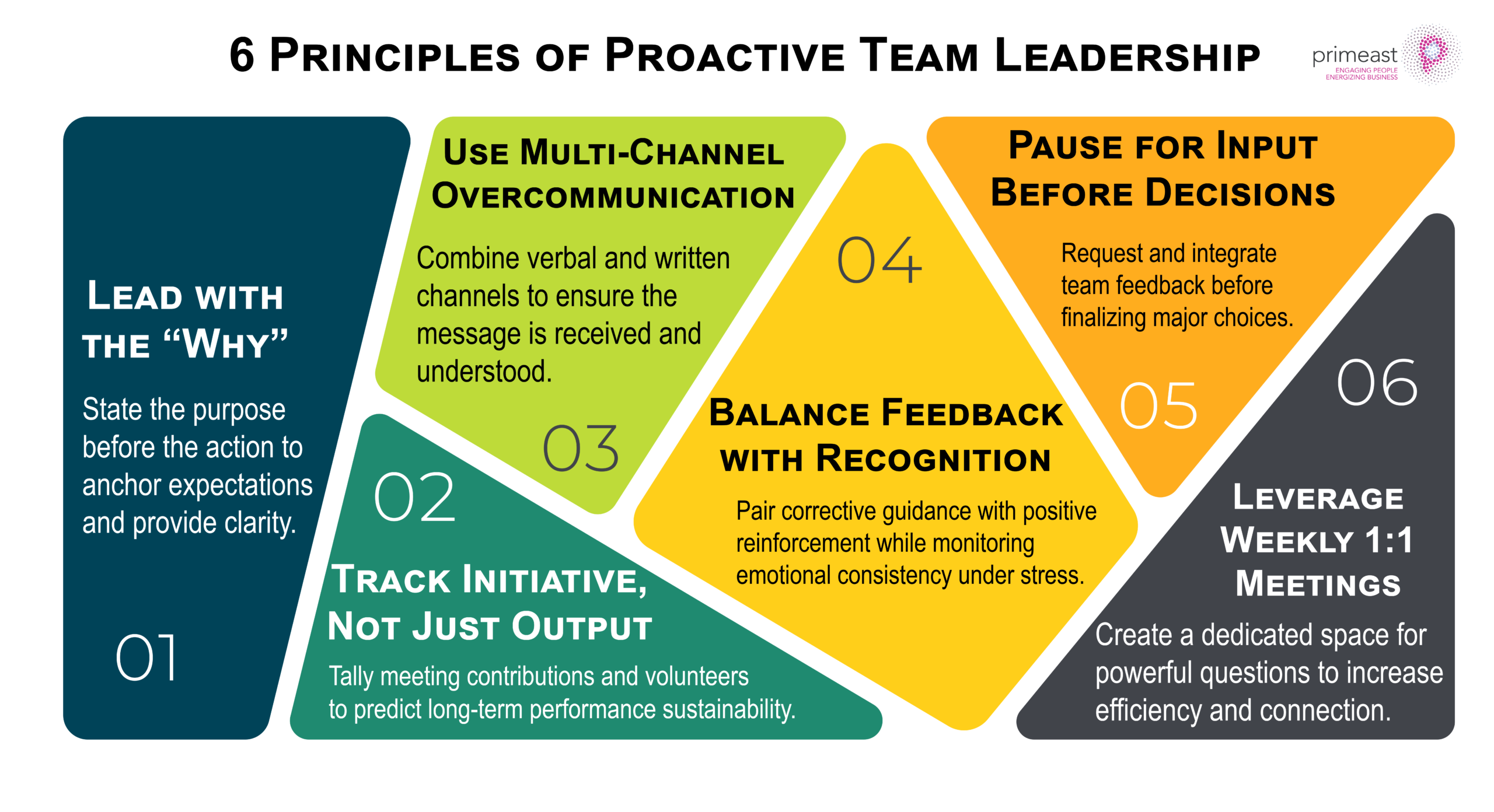
- Make practical adjustments: state the “why” before the “what” to anchor expectations in purpose.
- Lean towards “overcommunicating” and use multiple channels (not just verbally and not just in writing…use both).
- Pause before final decisions to request and integrate input.
- Balance corrective feedback with recognition.
- Monitor emotional consistency under stress.
- Track participation and initiative, not just output, to predict sustainable performance. For example, tallying contributions in meetings, keeping a simple log of who volunteers ideas, or noting who takes on new tasks can offer quick, actionable insights.
- Leverage 1:1 meetings weekly (duration can be adjusted) to keep a pulse on your team members, ask powerful questions, provide a dedicated space for them to ask questions. 1:1 meetings increase efficiency and connection.
Reframed Story: Let’s see what happens in our original scenario: six months later, the leader holds another quarterly review. Targets remain ambitious, but the approach changes. The meeting begins with, “Here is why this goal matters for our strategy and for each of you.” After outlining priorities, the leader asks, “Before we lock this in, what risks or obstacles are we missing?” Feedback shifts to, “This section needs tightening, and your analysis was strong. Let’s build on that.” When tension rises, the leader pauses and says, “I want to ensure this is clear. What questions do you have?”
As a result, discussion increases. Team members challenge assumptions respectfully. Ownership improves because expectations feel shared rather than imposed. Standards remain high while engagement strengthens. Over time, this shift leads to measurable improvements and in a shorter period (!): engagement scores rise, retention rates among high performers improve, and the team consistently meets or exceeds their targets.
The leader’s intent stayed the same; behavior shifted.
For more information about how to develop your leaders, create more connection on your teams, and leverage these Coaching Tips within your organization, email [email protected].