The Challenge
Imagine this: a team has just missed a major project deadline due to unexpected client changes and shifting priorities. Tensions rise, emails fly at midnight, and a few team members begin showing signs of burnout, snapping at each other, skipping lunch, and working long hours in silence. Meanwhile, their manager is also stretched thin but insists on keeping a calm façade, never mentioning the stress or asking for support. The result? A culture where silence replaces solutions and stress festers quietly under the surface.
Strategize
Resilience is not about avoiding stress. It is about responding to it with clarity, flexibility, and care. Managers often feel the need to appear invulnerable to “hold the team together.” But research and practice show that modeling healthy, resilient behavior, including admitting stress, setting boundaries, and asking for help, actually strengthens a team’s trust and coping strategies.
When managers openly name challenges, share coping strategies, and set clear work-life boundaries, they give others permission to do the same. This reduces stigma around stress and prevents burnout from being seen as a badge of honor.
Dig Deeper
Managers can deepen their impact by integrating resilience practices into everyday routines. Start by reflecting on these questions:
- Do I regularly communicate when I’m feeling stretched, and how I’m managing it?
- Have I modeled what it looks like to say no or renegotiate deadlines?
- Do I talk about wellness and rest as part of our team’s success strategy?
Measuring resilience doesn’t require complex diagnostics. Instead, consider these simple metrics:
- Are people taking time off and logging off at a reasonable hour?
- Do team members openly discuss challenges without fear?
- Are one-on-ones focused not just on progress, but also on wellbeing?

Take Action
Here are four small but powerful steps you can take this week to model resilient leadership:
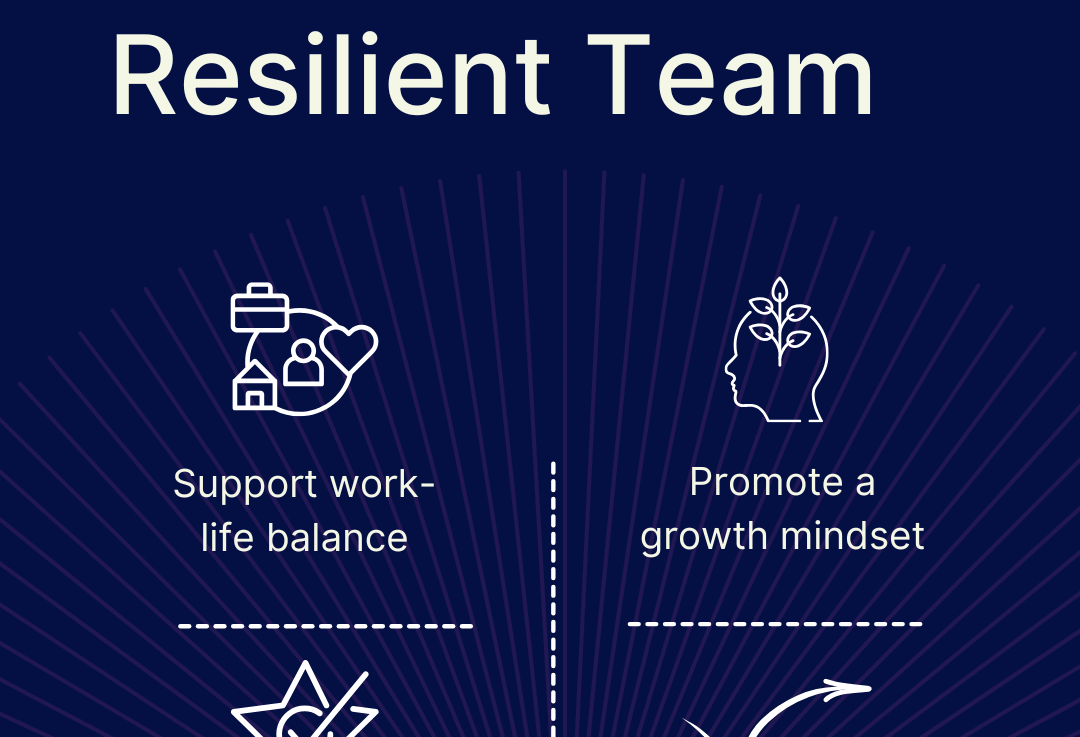
- Support work-life balance: Block time on your calendar for a break or log off on time, and let your team know why.
- Promote a growth mindset: In your next meeting, name a recent challenge and how you handled it without pretending it was easy.
- Focus on shared success: Ask for input or delegate a task you’re struggling with to show collaboration is strength, not weakness.
- Celebrate the bounce-back: Celebrate a teammate who bounced back from a tough sprint with renewed energy or creative problem-solving.
By taking these actions, you show that resilience is not about perfection. It’s about adaptation, transparency, and care. In doing so, you build a team that survives adversity and grows stronger because of it. Remember, your team doesn’t need a superhero. They need a human who bounces back.